
How to Clean Split AC Filters Like a Pro with LifeVolt
Learn the professional secrets to cleaning your split AC filters to boost cooling efficiency and reduce power bills. Discover why high-velocity airflow is the ultimate tool for HVAC maintenance.
Introduction: The Silent Efficiency Killer in Your Home Office
As a software developer and the founder of LifeVolt, I spend a significant portion of my day in front of high-performance hardware. Whether it is a workstation running complex Docker containers or a high-end server stack, thermal management is everything. But there is one piece of hardware in our "office ecosystem" that we constantly overlook: the Split Air Conditioner. Just like a CPU that begins thermal throttling when its heatsink is caked in dust, your AC unit suffers a massive performance hit when its filters are neglected. Most homeowners wait until the air feels warm or a strange smell permeates the room before they even think about maintenance. By then, the damage—in the form of spiked electricity bills and internal component wear—is already done.
I started LifeVolt because I was tired of subpar tools that couldn't handle the rigors of professional-grade cleaning. We treat our electronics with precision, so why do we treat our AC units with a dusty rag and a prayer? Cleaning your AC filter isn't just about hygiene; it’s about fluid dynamics and thermal efficiency. When those mesh layers are clogged, your AC's compressor has to work twice as hard to move the same volume of air. In this deep dive, I’m going to take you through the technical reasons why dust is your AC’s greatest enemy and provide a professional-step-by-step guide to reclaiming your cooling power using the LifeVolt 750W High Power Blower.
The Science of Airflow: Physics, RPM, and Thermal Resistance
To understand why a professional clean matters, we have to look at the physics of heat exchange. A split AC works on the principle of evaporation and condensation. The indoor unit’s evaporator coil absorbs heat from your room air. For this exchange to be efficient, air must pass freely over the coils. Dust acts as a literal thermal insulator. When a layer of particulates settles on your filter, it increases "Static Pressure." In HVAC terms, this means the blower fan has to exert more force to pull air through the resistance of the dirt.
When airflow (measured in Cubic Feet per Minute, or CFM) drops, the evaporator coil can actually get too cold, leading to ice formation. This is the AC equivalent of "Thermal Throttling." Furthermore, let’s talk about the fan motor. Most split ACs use a centrifugal fan. When the filters are blocked, the RPM (Rotations Per Minute) might stay constant, but the load on the motor increases significantly. This leads to premature bearing wear and electrical inefficiency. There is also the risk of Electrostatic Discharge (ESD) and moisture buildup. Dust is hygroscopic—it holds onto moisture. This creates a breeding ground for mold and "Biofilm" on the fins behind the filter. A high-velocity blast of air, like the one generated by the LifeVolt 750W motor, is the only way to dislodge these micro-particles before they cement themselves into the cooling fins.
Step-by-Step Tutorial: The Professional Deep Clean
Step 1: Power Isolation and Safety Protocol
Before touching any hardware, safety is paramount. Switch off the AC at the remote, then isolate the power at the main circuit breaker or the plug point. This prevents any risk of electrical shock and ensures the fan doesn't engage while your hands are near the blower wheel.
Step 2: Accessing the Evaporator Housing
Locate the notches on the sides of the indoor unit. Gently lift the front panel upward until it clicks into its open position. You will see the primary mesh filters—usually two or three rectangular panels—coated in a grey layer of debris. Note how the dust is concentrated; this tells you the path of least resistance the air was taking.
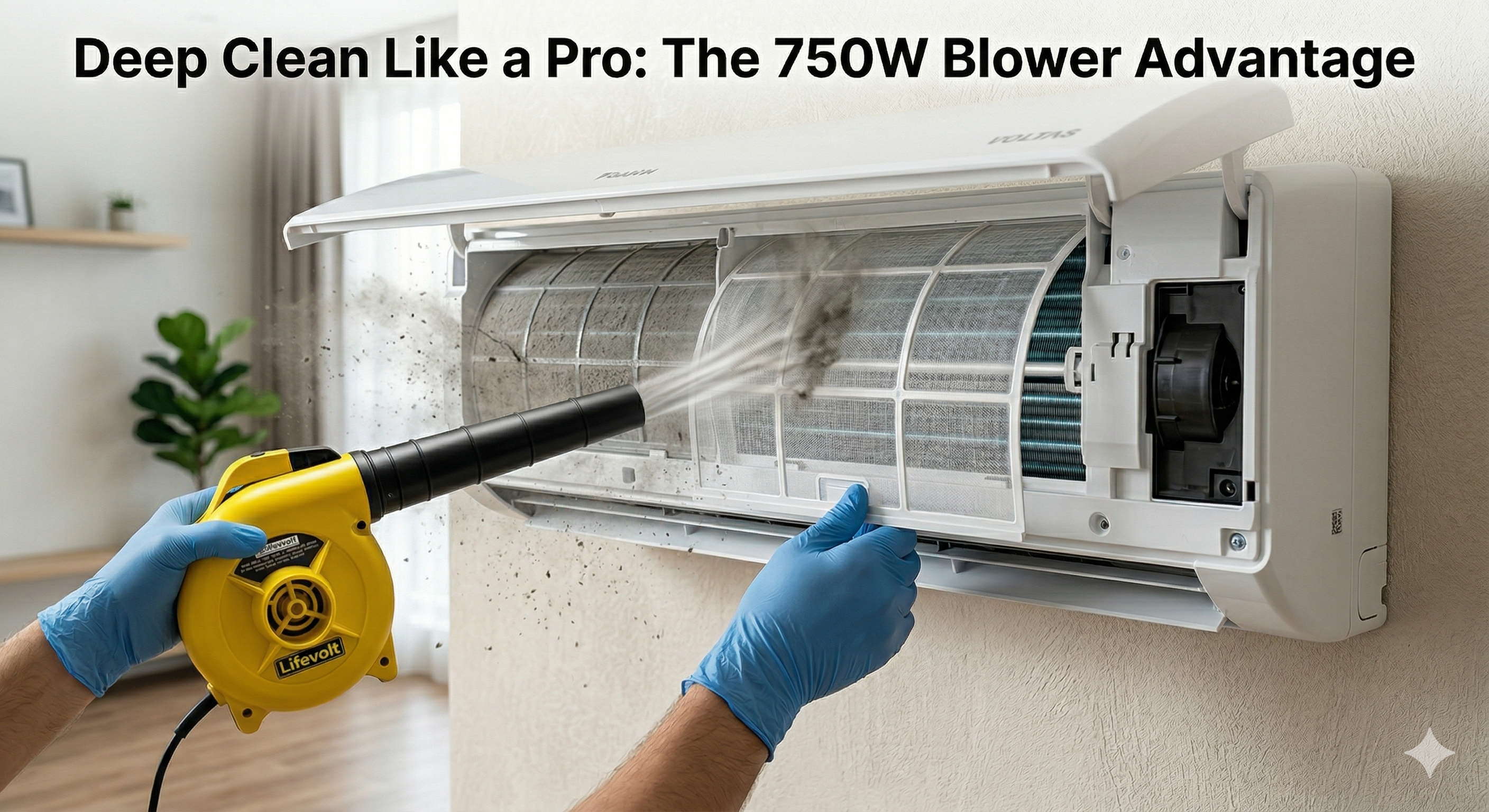
Step 3: The "Dry Blast" Pre-Cleaning
Before getting the filters wet, use your LifeVolt 750W Blower. Why dry first? Because water turns dust into mud, which can then get pushed deeper into the mesh pores. Take the filters outside and use the concentrated nozzle of the LifeVolt to blast air from the clean side (the back) toward the dirty side (the front). This reverses the path the dust took to get in, popping it out of the mesh instantly.
Step 4: Deep Rinse and Antimicrobial Treatment
Once the bulk of the dust is gone, rinse the filters under lukewarm running water. Avoid using harsh brushes as they can tear the delicate nylon mesh. If there is greasy buildup (common in studio apartments), use a mild pH-neutral detergent. Shake off the excess water.
Step 5: High-Speed Drying and Reinstallation
Never reinstall a wet filter; moisture trapped in the mesh will immediately catch new dust and lead to mold growth. Use the LifeVolt Blower on its high-velocity setting to "strip" the water off the mesh. The 750W motor provides enough pressure to dry the filters in under 60 seconds. Slide them back into their tracks and snap the front cover shut.
Comparative Analysis: Why LifeVolt Wins the Maintenance War
When it comes to cleaning precision hardware, you have four main options. Let's look at the Cost-Benefit ratio:
- Canned Air (Aerosols): These are the "standard" for many, but they are expensive in the long run. They lose pressure as the can gets cold and contain fluorocarbons. One LifeVolt unit costs roughly the same as 10 cans of air but lasts for years.
- Vacuums: A vacuum uses suction, which is often ineffective for "caked" dust on mesh. More importantly, vacuum nozzles can generate significant static electricity, which is a massive risk if you accidentally touch the control board (PCB) of the AC.
- Manual Brushing: Brushes are slow and often just push dust deeper into the crevices of the AC fins. You risk bending the fragile aluminum fins, which permanently reduces heat exchange surface area.
- The LifeVolt 750W Blower: It offers Non-Contact Cleaning. The sheer velocity of air (CFM) does the work, meaning no physical stress on the components. It is a one-time investment that services your AC, your PC, and even your car interior.
Long-Term Maintenance: The "Healthy Hardware" Schedule
To avoid a "System Failure" or a massive repair bill, follow this professional maintenance cadence:
- Every 2 Weeks: Quick dry-blast of the filters with the LifeVolt. You don't even need to wash them if you do this regularly.
- Every 3 Months: Full wash of filters and a deep blow-out of the evaporator fins and the "swing" flaps.
- Annually: Check the outdoor condenser unit. Use the LifeVolt to clear out dried leaves and debris from the outdoor fan—this is where the real "Load" on your electricity bill happens.
Look for signs of trouble: if you see ice on the thin copper pipes of the outdoor unit, your airflow is severely restricted. If the AC "hisses," your fins are likely clogged, causing pressure imbalances.
Conclusion: Empowering Your Environment
At LifeVolt, our mission is to provide professional-grade power to the everyday user. We believe that your tools should be as high-performance as the technology you use them on. By maintaining your Split AC with the LifeVolt 750W Blower, you aren't just cleaning; you're optimizing. You're extending the life of your hardware, saving money on energy, and ensuring the air you breathe is free of contaminants. Ready to upgrade your maintenance game? Visit our shop and get the LifeVolt 750W Blower today.
Featured Products
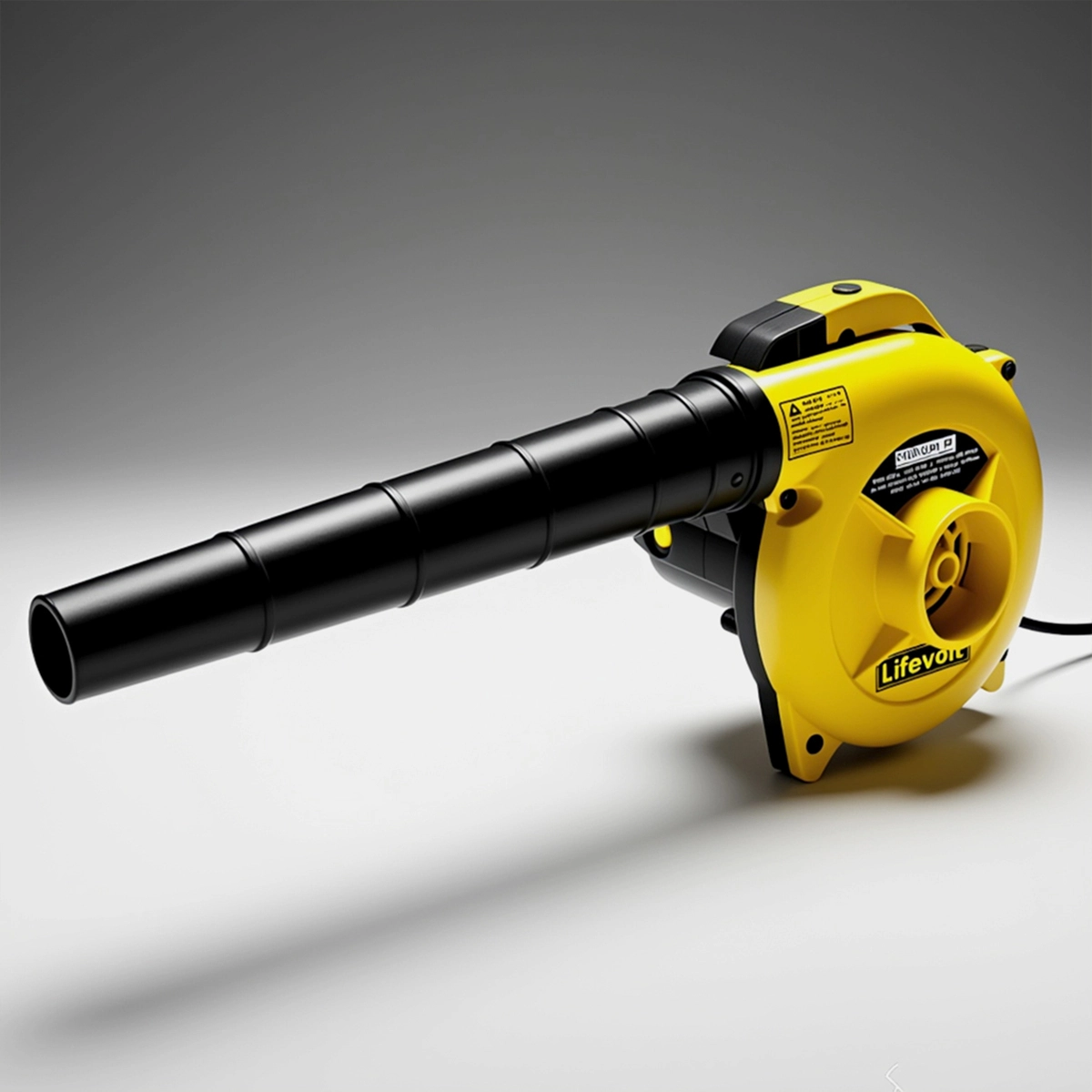
Lifevolt Electric Air Blower 750W High Power Dust Cleaner | 18000 RPM, 230V, 222 km/h Air Speed | 3 Hours Continuous Working | Multi-Purpose Blower for AC, Car, Computer & Workshop Cleaning
View product →
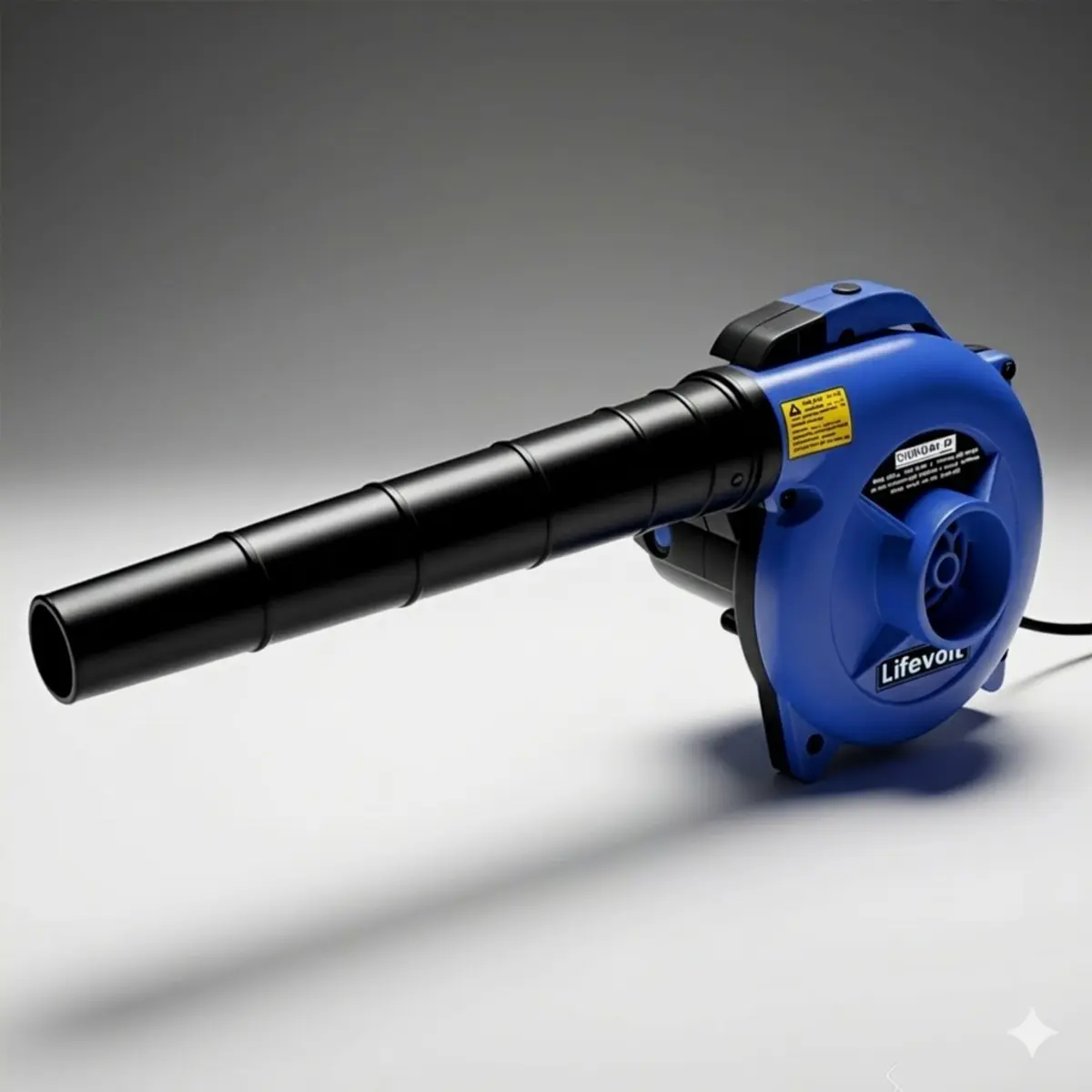
Lifevolt Electric Air Blower 750W High Power Dust Cleaner | 18000 RPM, 230V, 222 km/h Air Speed | 3 Hours Continuous Working | Multi-Purpose Blower for AC, Car, Computer & Workshop Cleaning
View product →